
What are Backlinks and Why They Matter for SEO

Two web browser windows connected by a chain link, representing backlinks in SEO

This post may contain affiliate links. If you click one and make a purchase, we may earn a commission at no extra cost to you. We only recommend tools we use and trust.

Backlinks are the backbone of off-page SEO. If you’re trying to rank on Google, understanding how backlinks work—and how to build the right ones—can make or break your strategy.

Let’s explore what backlinks are, why they’re important, how to build them, and what to avoid.

🔗 What Is a Backlink?

A backlink is a hyperlink from one website to another. If another site links to a page on your website, that’s a backlink to your site. It’s essentially a vote of confidence from one site to another.

There are two primary types of backlinks:

  • Dofollow backlinks: These pass on SEO value (often called \”link juice\”) and help improve your rankings.
  • Nofollow backlinks: These tell search engines not to pass authority. While they don’t boost SEO directly, they’re still useful for traffic and visibility.

📈 Why Are Backlinks Important?

Backlinks are one of Google’s top ranking factors. According to Backlinko, pages with lots of quality backlinks tend to rank higher than those without.

  • Authority: Backlinks from trustworthy sites boost your domain authority.
  • Traffic: Some backlinks drive direct referral traffic.
  • Indexing: Google finds and indexes your site faster when others link to it.
  • Trust: Backlinks signal credibility to both users and search engines.

⚠️ What Makes a Backlink Valuable?

  • Relevance: Links from sites in your niche are more powerful.
  • Authority: A backlink from a high-authority site (like Forbes or Moz) carries more weight than one from a random blog.
  • Anchor text: Descriptive anchor text helps with keyword relevance.
  • Placement: In-content links are more valuable than footers or sidebars.

Avoid spammy backlinks from irrelevant or low-quality sites. These can actually hurt your SEO.

🛠️ How to Build Quality Backlinks

  • Guest Blogging: Write helpful content for blogs in your niche with a backlink to your site.
  • Create Linkable Assets: Publish in-depth guides, infographics, or tools others want to reference.
  • Internal Linking: Interlink related posts like What Is SEO and Why It Matters to guide users through your content and boost authority.
  • Submit to Relevant Directories: Avoid spammy directories. Focus on industry-specific or local directories with real traffic.
  • Answer Questions on Forums: Platforms like Reddit and Quora allow contextual links—just don’t spam.
  • Social Signals: Share your content on Reddit, X (Twitter), Facebook, and niche forums to increase reach.

💡 Visualizing Backlink Value
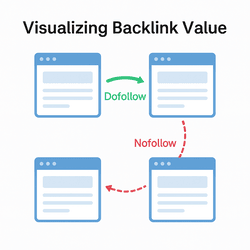
Backlink diagram showing dofollow and nofollow connections

Visualizing how dofollow and nofollow backlinks pass authority in SEO.

🚫 Common Mistakes to Avoid

  • Buying backlinks from shady sellers
  • Using automated link builders
  • Overusing exact match anchor text
  • Spamming comments or forums

Stay white hat. Google’s algorithm is smarter than ever.

📣 Final Thoughts + What’s Next

If content is king, backlinks are the kingdom’s currency. But they only work if you focus on quality over quantity.

Next up, we’ll break down the best tools to monitor backlinks and track your growth.

Want step-by-step help building your own online business?

Wealthy Affiliate - Start Your Online Business

.

Your Complete ChatGPT Email Storytelling Toolkit

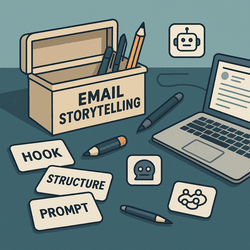
A digital toolkit labeled "Email Storytelling" with tools like prompt cards, pens, and AI icons spread across a desk

This post may contain affiliate links. If you click one and make a purchase, we may earn a commission at no extra cost to you. We only recommend tools we use and trust.

You’ve made it to the end of the Email Storytelling with ChatGPT series—and now it’s time to tie it all together. This wrap-up isn’t just a summary. It’s a powerful toolkit you can use over and over again to write better, more human, more persuasive emails.

Below, you’ll find all the essential prompts from the series, organized by purpose, plus a few new bonus tips to help you create your own storytelling workflow.

🧰 The Core Prompts (Your Storytelling Toolbox)

  • Story Starter Prompt: “Write an email that starts with a short, vivid personal story and connects it to this offer…”
  • Make It Human Prompt: “Rewrite this email to sound more conversational, like it’s coming from a trusted friend.”
  • Emotional Hook Prompt: “Add curiosity, urgency, or emotion to the opening line to hook the reader.”
  • Simplify Prompt: “Rewrite this email to be clear and concise, written at a 6th-grade reading level.”
  • Real-Time Rewrite Prompt: “Rewrite this with more storytelling, energy, and personality—but keep the core message intact.”

These aren’t just tricks. They’re tools. Each one can transform a flat email into something compelling—and most of the time, you can see the difference immediately.

⚙️ How to Use This Toolkit in Your Workflow

  1. Start with your goal. Is it to inform, sell, connect, entertain?
  2. Write your first draft fast. Don’t overthink it.
  3. Run it through your prompts. Use ChatGPT to rewrite, refine, and humanize.
  4. Pick the best version—or blend them. You’re in control. Use what feels right.
  5. Test and tweak. Add CTAs, subject lines, and emotional hooks last.

This approach helps you write faster, improve quality, and maintain your voice—even if you’re not a “natural” storyteller.

💡 Bonus Prompt: The Story Swap

Prompt:
“Replace the opening of this email with a story that better matches the reader’s emotion or current situation.”

Sometimes the story is fine, but the angle is off. This one helps realign your email to meet your reader where they are.

📌 Save It, Use It, Share It

You now have a plug-and-play storytelling system that can work for any email—from onboarding to promotions to weekly newsletters. Keep it bookmarked. Use it often. Share it with your team or VA.

And remember: people ignore boring emails. But they read (and share) stories.

🎯 What’s Next?

This wraps up the email storytelling series… but we’re just getting started. Up next: we’ll dive into SEO and backlinks to help you get traffic to those awesome emails and offers.

Need help crafting a story-driven opt-in funnel? Or want to turn these prompts into a fill-in-the-blank swipe file? Let me know—we can build it together.

A digital toolkit labeled 'Email Storytelling' with tools like prompt cards, pens, and AI icons spread across a desk
Build your best emails with this complete storytelling toolkit powered by ChatGPT.

Image Description: A stylized flat-lay image of a digital writer’s desk, with labeled prompt cards, an open laptop showing an email draft, and icons representing AI tools. The design represents an organized storytelling system for writing compelling marketing emails.

Real-Time Rewrite Prompts: Fix It as You Write It

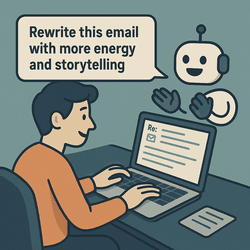
AI assistant helping a person rewrite email content on a laptop in real time

This post may contain affiliate links. If you click one and make a purchase, we may earn a commission at no extra cost to you. We only recommend tools we use and trust.

Sometimes your email sounds fine—but not great. Something’s off. It doesn’t flow. It doesn’t pop. You’re not alone. That’s where real-time rewrite prompts come in.

Whether you’re writing a welcome email, a sales pitch, or a story-based newsletter, these rewrite prompts for ChatGPT can help you transform good into great—without starting over.

Let’s fix that flat copy right now.

⚡ The Prompt: “Rewrite this with more energy and storytelling”

Prompt:
Rewrite this email with more storytelling, personality, and emotional pull. Make it conversational, human, and slightly humorous. Keep the original purpose.

This is a game-changer. It’s like having a creative editor who gets your voice and turns your first draft into something worth reading.

🔁 The Prompt: “Make this sound like a story from experience”

Prompt:
Rewrite this email to sound like it’s a real story from personal experience. Use first-person language, set the scene, and include emotions and a turning point.

If your email is too pitchy or reads like a product brochure, this one helps you connect with your reader. We’re all wired to respond to stories.

🧠 The Prompt: “Rewrite this with stronger emotional hooks”

Prompt:
Rewrite this email with stronger emotional triggers. Use curiosity, fear of missing out, frustration, relief, or hope to motivate the reader to act.

You don’t need to be manipulative—just human. Tap into real emotions and your emails become irresistible.

✨ Combine Them for Magic

Use one prompt. Then try another. Then mix and match. The goal is to see which version hits hardest while still sounding like you.

You don’t have to choose between polished and personal. You can have both—with a little help from ChatGPT.

Your Turn: Try This

Take one of your past emails. Plug it into ChatGPT with one of the prompts above. Then compare your original to the rewrite. You’ll probably never write the same way again.

And that’s the point. Better stories, better connection, better results.

Coming Up Next…

In the final article of the series, we’ll give you a toolkit of all the prompts we’ve used—and how to stack them into your own storytelling workflow. Bookmark it, print it, tattoo it (kidding… unless?).

AI assistant helping a person rewrite email content on a laptop in real time
ChatGPT makes rewriting your email copy feel like a creative collaboration.

Image Description: A fun and modern illustration showing a human typing an email while a friendly AI robot helps them rewrite it. The scene captures the concept of real-time editing and improvement through storytelling.

What is SEO

SEO concept with magnifying glass over search bar and upward arrow showing website traffic growth

What Is SEO and Why It’s Still the Most Powerful Free Traffic Strategy

What Is SEO?

Search Engine Optimization (SEO) is the practice of improving your website so it shows up in search results when people look for topics, products, or services related to your niche. It’s how you get free, ongoing traffic from Google, Bing, and other search engines without paying for ads.

At its core, SEO is about making your site easy for search engines to understand and trustworthy enough to recommend. When done right, SEO doesn’t just boost your rankings—it builds long-term visibility, brand authority, and leads on autopilot.

Why SEO Still Matters in 2025

In a world full of fleeting trends, SEO remains one of the most powerful and consistent strategies for online growth. Unlike paid ads that disappear when your budget dries up, SEO builds over time. It helps you attract the right audience, earn their trust, and convert them into loyal subscribers, customers, or clients.

Search traffic is still the highest-converting traffic source for most online businesses. Why? Because users are actively looking for answers. If your content shows up with the right solution at the right time, you win.

The 3 Pillars of SEO

1. On-Page SEO

This includes everything you do within your content: targeting the right keywords, using strong headlines, optimizing images, writing great meta descriptions, and making sure your content is easy to read.

2. Off-Page SEO

This is how you build authority outside your website. The biggest factor here is backlinks—links from other websites pointing to yours. Think of backlinks like online votes of confidence. We dive deep into this topic in our Backlink Basics post.

3. Technical SEO

Technical SEO makes sure your website is fast, mobile-friendly, secure, and properly structured for search engines. It includes things like fixing broken links, using schema markup, and having a clean site architecture.

Who Should Care About SEO?

If you have a website, you should care about SEO. Whether you’re a blogger, affiliate marketer, service provider, small business owner, or content creator, SEO helps your audience find you.

Even if you spend most of your time on social media, SEO can extend the life of your content. That tweet or reel may disappear in a few days—but a good blog post can rank and bring traffic for months or even years.

What You’ll Find in the SEO Section of ForgedSite

This section is built for marketers at every stage. We’ll cover:

Some links on this page are affiliate links. That means if you click and purchase, I may earn a small commission—at no extra cost to you.

  • Beginner-friendly SEO tutorials
  • Step-by-step guides for keyword research
  • Backlink strategies that actually work
  • Reviews of tools like SE Ranking and Jaaxy
  • Honest advice without the fluff

Let’s Get Started

If you’re new to SEO, the best place to begin is by learning about backlinks—one of the most important (and misunderstood) parts of the SEO puzzle. Check out our first article in the Backlinks series here:

Backlink Basics: What They Are and Why They Matter

Ready to grow your site the right way? Stick around, subscribe to our newsletter, and let’s build something sustainable together.

Want step-by-step help building your own online business? Check out my favorite platform below.
What Is SEO and How Does It Generate Free Traffic?

What is SEO and how does it generate free traffic – graphic with magnifying glass and bar chart

If you’ve been trying to grow your website or affiliate offers without spending a dime, you’ve probably heard the term “SEO” thrown around. But what exactly is it—and how can it help you get traffic for free?

What Is SEO?

SEO stands for Search Engine Optimization. It’s the process of improving your content so that search engines like Google can easily find, understand, and rank it in their results.

When someone types a question into Google—like “how to make money online” or “best traffic exchange 2025”—Google scans its index of web pages and tries to return the most helpful and relevant ones. If your content is optimized correctly, it could show up at the top of those results.

And if your content shows up near the top? You get free, organic traffic—without spending a penny on ads.

How Does SEO Actually Work?

SEO works by sending clear signals to Google that your page is relevant and trustworthy. This includes:

  • Using keywords that match what people are searching for
  • Creating helpful, well-structured content that answers their questions
  • Formatting your content properly with headings, bullet points, and links
  • Speed and mobile-friendliness—Google favors pages that load fast and look good on phones

When you combine all of these things, your page becomes more likely to appear in search results—and that’s where the free traffic starts flowing.

Why SEO Traffic Is So Valuable

Traffic from SEO is often called organic traffic. These are people who found your content by typing a question into a search engine—not from a paid ad, a traffic exchange, or a social post.

Organic traffic tends to be:

  • Highly targeted – They’re looking for exactly what you’re offering
  • More engaged – They spend more time reading, clicking, and subscribing
  • Free – Once your content ranks, the clicks keep coming without paying per view

How to Start with SEO (Without Getting Overwhelmed)

If you’re just starting out, don’t worry. You don’t need to be a tech wizard or hire an expensive agency. Here’s a simple checklist to get started:

  • Pick a long-tail keyword (like “free traffic for affiliate marketing”) and make it your page title
  • Use that keyword in your first paragraph and subheadings
  • Write at least 500–1000 words of real, helpful content
  • Add internal links to other posts on your site
  • Make sure your site is mobile-friendly and loads quickly

Final Thoughts

SEO isn’t a trick. It’s not a quick fix or overnight hack. It’s a way of helping search engines—and real people—find your content. And once you start getting even a few visits per day from SEO, it adds up over time.

Want to learn more simple strategies to drive traffic without paying for ads? Check out the full 104 Free Advertising Questions series over at ForgedSite.com.

Want step-by-step help building your own online business? Check out my favorite platform below.

Free Traffic Q&A Series:

A creative light bulb made of colorful traffic signs on a neutral background

Free Traffic Q&A Series: Real Answers for Marketers Who Don’t Want to Pay for Clicks

If you’ve ever Googled “How do I get free traffic to my website?”—congrats, you’re in the right place. You’re not alone, and yes, there are answers.

This new series on ForgedSite.com is called Free Traffic Q&A, and it’s exactly what it sounds like. Real questions. Real answers. All focused on getting traffic without spending money.

We’re talking SEO, social media hacks, content tricks, automation tools, and stuff even the gurus don’t talk about unless you’ve paid $997 for their “Traffic Tornado” course.

Who is this for?

  • New affiliates who don’t want to burn cash on ads
  • Bloggers and creators trying to build traffic organically
  • PLR users looking to get eyes on their content
  • Side hustlers and solopreneurs who want results without risk

This series will give you one digestible, actionable tip at a time. No fluff. No vague “believe in yourself” pep talks (though we do believe in you). Just simple, free methods that actually work.

Why Q&A format?

Because traffic questions are everywhere. In Facebook groups. On Reddit. Inside safelists. In late-night emails from desperate marketers who just want one dang visitor to click their link.

Each post will take a real traffic-related question and break it down with a clear answer, an example, and (when it fits) a resource or tool to make it work faster.

You can read one, apply it, and move on. Or binge ten and launch your own free traffic game plan.

What’s coming next?

  • What’s the fastest way to get free traffic as a beginner?
  • Can I really get traffic from TikTok without showing my face?
  • Is SEO still worth doing in 2025?
  • How do I get traffic to a new blog with zero followers?

And a whole lot more. We’ve got over 100 questions queued up, so if you’re serious about growing your traffic without going broke, bookmark this site and come back often.

While you wait, check out our latest reviews of top free traffic exchanges:

Also, don’t miss our top picks for free and low-cost classified ad sites:

These platforms are open to all types of marketers, with options to promote affiliate links, blogs, YouTube channels, landing pages, and more.

You can also subscribe to our newsletter for weekly traffic tips, tool reviews, and no-nonsense marketing advice.

This series won’t make you rich overnight…
But it will help you build traffic one click at a time—without losing your shirt or your sanity.


Want step-by-step help building your own online business? Check out my favorite platform below.
What Kind of Results Can You Really Expect from Traffic Exchanges?

What kind of results can you expect from traffic exchanges – blog graphic with upward arrow chart

Let’s talk straight—traffic exchanges are not magic money machines. But used correctly, they can absolutely drive traffic, leads, and even sales to your offers. The key is setting the right expectations and using smart strategy over blind clicking.

What You Can Expect From the Start

  • ✅ Real human visitors
  • ✅ Hundreds (sometimes thousands) of impressions per week
  • ✅ Email opt-ins and occasional sales—if your funnel is built correctly
  • ✅ A way to build brand awareness for your site or lead magnet

But here’s what you won’t get:

  • ❌ Passive income on autopilot
  • ❌ Huge affiliate commissions with no testing
  • ❌ Results from poor splash pages or direct links

Conversions Vary by Platform & Page

Your results will depend on:

  • The platform – Some exchanges (like TrafficAdBar or Infinity Traffic Boost) deliver better quality than others.
  • Your landing page – Slow, ugly, or generic pages = bad results.
  • Your CTA – Are you offering something clear, valuable, and fast?

So, What’s a “Good” Result?

Here are some benchmarks based on my experience and other marketers I trust:

  • 1-3% opt-in rate from cold TE traffic is solid
  • 0.1–1% click-through on text/banner ads is normal
  • 1 sale per 500–1000 clicks is not unusual if you’ve got a strong funnel

If you’re getting consistent opt-ins, even a handful per week, you’re winning with free traffic.

How to Improve ROI From TEs

  • Use a splash page with curiosity and a single CTA
  • Test different headlines and colors—track everything
  • Follow up with a great autoresponder series to warm up your cold leads
  • Use rotators to test multiple offers and pages

Where to Send TE Traffic

Here’s what’s working for me and others:

  • Bridge pages to affiliate offers
  • Lead magnets with cheat sheets, checklists, or free tools
  • Signup pages for classified ad sites or safelists
  • Blog posts with strong call-to-actions

Final Thoughts

Traffic exchanges will never replace SEO or paid traffic—but they don’t have to. If you’re looking for a hands-on way to get eyeballs on your links while testing your funnel, they’re absolutely worth it.

Want help making the most of your traffic exchange traffic? Head over to ForgedSite.com for my full strategy series and traffic tools.

Want step-by-step help building your own online business? Check out my favorite platform below.

How to Use Multiple Traffic Exchanges Without Losing Your Mind

How to use multiple traffic exchanges without losing your mind – blog graphic with network icon

If you’ve ever tried using more than one traffic exchange at a time, you know how fast it can go from “free leads” to “full-blown chaos.” But with the right strategy, you can turn these platforms into a consistent stream of traffic without burning out.

This post shows you how to run multiple traffic exchanges—like Infinity Traffic Boost, TrafficAdBar, EasyHits4U, TrafficG, and TopSurfer—without going cross-eyed or wasting hours every day.

Why Bother With Multiple Exchanges?

Not every visitor is the same. Each traffic exchange has its own member base, activity level, and ad rotation speed. Using several gives you broader exposure and more chances to find what sticks.

Plus, when you rotate splash pages or test different angles across platforms, you learn what actually converts—not just what gets clicks.

How to Make It Work

1. Pick 3–5 Core Exchanges

Don’t sign up for 15 sites and burn out in week one. Stick with exchanges that:

  • Have active memberships
  • Track well with your niche or offer type
  • Give you both banner and text ads

My current rotation includes:

2. Use a Rotator or Tracker

You don’t want to manually split test landing pages on five platforms. Use a rotator tool like LeadsLeap, Link Wizard, or even a free HTML redirect script to send traffic to one link that distributes it evenly.

This makes split-testing easy and keeps things centralized.

3. Create a Surfing Schedule

Trying to click all day? That’s burnout waiting to happen. Instead, surf each exchange for 10–15 minutes per day, one at a time, and set a timer if needed.

Build it into your routine: Mornings = Infinity Traffic Boost. Lunch break = TrafficAdBar. Evenings = TopSurfer. You’ll earn credits and keep active without clicking for hours.

4. Recycle Ads Smartly

Don’t build new ads from scratch every time. Take your best banner, text, and splash page combo and use it across all exchanges. Test new variations only when the traffic drops.

5. Track Performance Weekly

Every Sunday, check your trackers or opt-in stats. See which exchanges gave you the most clicks, opt-ins, or time-on-page. Pause what’s not working. Scale what is.

Bonus Tips

  • Use different headlines for different platforms to avoid ad blindness
  • Stack your banner and text ads alongside your main splash page
  • Consider upgrading on the exchange that gives you the best results

Conclusion: Free Traffic, Smart Strategy

Multiple traffic exchanges can be a goldmine or a headache—it all depends on your system. With just a little structure, you can turn your ad pages into a permanent traffic machine that feeds your blog, builds your list, and promotes your affiliate offers.

Want to see my exact setup and lead tracking tools in action? Head over to ForgedSite.com and follow the traffic trail.

Want step-by-step help building your own online business? Check out my favorite platform below.
TopSurfer: A Legacy Traffic Exchange Reborn for 2025

TopSurfer logo with modern design and blog title for 2025 review

In the noisy world of traffic exchanges, TopSurfer stands out—not just because it works, but because of the story behind it.

Originally founded over two decades ago, TopSurfer was a trusted go-to for affiliate marketers and website owners looking to get free, consistent traffic. After the original founder passed away, his children tried to keep the platform alive—but didn’t have the heart to continue. Enter Frank Salinas, a respected name in online marketing, who stepped in and gave TopSurfer a new lease on life.

Why I Joined TopSurfer

I haven’t fully dived into it yet, but I joined TopSurfer at its highest level because I see the potential. It’s got the bones of a reliable traffic source—and with Frank Salinas at the helm, I’m confident it’ll only get stronger.

I plan to integrate it into my weekly routine and test new opt-in pages and affiliate offers over the coming weeks. When I do, I’ll be sharing real results and tweaks over on ForgedSite.com.

What Makes TopSurfer Different?

  • Stability & Simplicity: No crazy popups, no distractions—just a clean, fast surfing experience.
  • Daily Bonuses & Start Page Exposure: Your ads can be seen the moment users log in.
  • Real Human Traffic: You’re not competing with bots. These are real eyes, real clicks, real leads.
  • Consistent Improvements: Frank has been actively improving the backend, cleaning up the systems, and listening to users.

How It Works

Like most traffic exchanges, TopSurfer uses a credit-based system. You earn credits by viewing other users’ websites. You spend those credits to display your own site to others. Banner ads and text ads are included as part of the experience.

It’s simple, direct, and—if you’re consistent—very effective.

Pro Tips to Maximize TopSurfer

  • Use a splash page: Don’t just send raw affiliate links. Brand your funnel and pre-frame your offer.
  • Rotate pages: Use a tracker or rotator (like LeadsLeap) to test multiple opt-ins or offers.
  • Click daily: Stay active. The more you engage, the more credits you’ll earn and retain.
  • Upgrade if it makes sense: Their upgraded plans offer better exposure if you’re scaling traffic.

Should You Join?

If you’re promoting low-cost offers, affiliate funnels, classified ad sites, or your own blog—TopSurfer is absolutely worth testing. Especially with Frank steering the ship, the platform is only improving from here.

Here’s my referral link if you’d like to support my work while getting started:

Join TopSurfer Now

Join TopSurfer - Free Traffic Exchange

Explore More Free Traffic Sources

TopSurfer is just one piece of the puzzle. If you’re building traffic the smart way, check out the rest of my series:

Want step-by-step help building your own online business? Check out my favorite platform below.

Is TrafficG Still Worth It in 2025? My Honest Take for Affiliate Marketers

Is TrafficG Still Worth It? – blog graphic with rising chart and TrafficG logo

Traffic exchanges are everywhere, but few have stood the test of time like TrafficG. If you’re an affiliate marketer looking for free, consistent traffic and actual clicks that don’t disappear into the void, keep reading.

Why I Still Use TrafficG

Let me be real. I’ve tested dozens of traffic exchanges, and TrafficG remains one of the few that keeps delivering. Here’s why:

  • It’s been around since 2001 — in this world, that’s ancient and reliable.
  • The site is active, stable, and clean — no endless popups or shady redirects.
  • Click credits are reasonable and stackable if you’re consistent.
  • I’ve gotten real traffic to sites like ForgedSite.com and my classified ad pages.

How It Works

TrafficG uses a classic credit-based system. You view other members’ websites, earn credits, and apply those to your own ads. Simple.

You get text ads and banner ad exposure included, which makes it a solid all-in-one option if you’re running splash pages, opt-ins, or affiliate links.

Tips to Maximize Your Results

  • Set up multiple ad campaigns to split test.
  • Rotate landing pages using a tracker like LeadsLeap or a rotator tool.
  • Use bold, benefit-driven headlines on your splash pages. These folks are clicking fast — make it count.
  • Log in and click daily, especially during reward days — your credits will stretch farther.

What to Watch Out For

This isn’t set-it-and-forget-it traffic. You get out what you put in. If you’re not clicking and maintaining active ads, your results will drop.

Also, don’t expect miracle conversions if your pages aren’t clean, fast, and mobile-friendly. This traffic is cold — treat it like a warm-up to your funnel, not a fire sale.

Who TrafficG Is Good For

If you’re:

  • Promoting affiliate offers
  • Building your email list
  • Running low-cost/free traffic tests
  • Using rotators or bridge pages

Then TrafficG should absolutely be in your toolkit.

Final Verdict

I still use TrafficG. It’s earned a spot in my weekly routine. The traffic is real, consistent, and measurable — and it’s helped me generate clicks, leads, and referrals.

It might not be flashy, but it works. And that’s more than you can say for a lot of shiny tools out there.

Sign up for free and give it a test run: https://trafficg.com/?member=choice4profit

Also Featured On ForgedSite.com

Want to see how TrafficG stacks up against other exchanges like Infinity Traffic Boost and TrafficAdBar? Check out my full series on free traffic at ForgedSite.com

Free Classified Ad Sites You’ll Love

Free Traffic Exchange - TrafficG

Want step-by-step help building your own online business? Check out my favorite platform below.