

This post may contain affiliate links. If you click one and make a purchase, we may earn a commission at no extra cost to you. We only recommend tools we use and trust.
Backlinks are the backbone of off-page SEO. If you’re trying to rank on Google, understanding how backlinks work—and how to build the right ones—can make or break your strategy.
Let’s explore what backlinks are, why they’re important, how to build them, and what to avoid.
🔗 What Is a Backlink?
A backlink is a hyperlink from one website to another. If another site links to a page on your website, that’s a backlink to your site. It’s essentially a vote of confidence from one site to another.
There are two primary types of backlinks:
- Dofollow backlinks: These pass on SEO value (often called \”link juice\”) and help improve your rankings.
- Nofollow backlinks: These tell search engines not to pass authority. While they don’t boost SEO directly, they’re still useful for traffic and visibility.
📈 Why Are Backlinks Important?
Backlinks are one of Google’s top ranking factors. According to Backlinko, pages with lots of quality backlinks tend to rank higher than those without.
- Authority: Backlinks from trustworthy sites boost your domain authority.
- Traffic: Some backlinks drive direct referral traffic.
- Indexing: Google finds and indexes your site faster when others link to it.
- Trust: Backlinks signal credibility to both users and search engines.
⚠️ What Makes a Backlink Valuable?
- Relevance: Links from sites in your niche are more powerful.
- Authority: A backlink from a high-authority site (like Forbes or Moz) carries more weight than one from a random blog.
- Anchor text: Descriptive anchor text helps with keyword relevance.
- Placement: In-content links are more valuable than footers or sidebars.
Avoid spammy backlinks from irrelevant or low-quality sites. These can actually hurt your SEO.
🛠️ How to Build Quality Backlinks
- Guest Blogging: Write helpful content for blogs in your niche with a backlink to your site.
- Create Linkable Assets: Publish in-depth guides, infographics, or tools others want to reference.
- Internal Linking: Interlink related posts like What Is SEO and Why It Matters to guide users through your content and boost authority.
- Submit to Relevant Directories: Avoid spammy directories. Focus on industry-specific or local directories with real traffic.
- Answer Questions on Forums: Platforms like Reddit and Quora allow contextual links—just don’t spam.
- Social Signals: Share your content on Reddit, X (Twitter), Facebook, and niche forums to increase reach.
💡 Visualizing Backlink Value
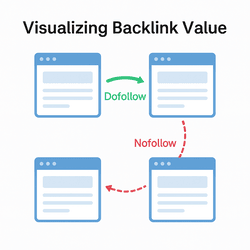
Visualizing how dofollow and nofollow backlinks pass authority in SEO.
🚫 Common Mistakes to Avoid
- Buying backlinks from shady sellers
- Using automated link builders
- Overusing exact match anchor text
- Spamming comments or forums
Stay white hat. Google’s algorithm is smarter than ever.
📣 Final Thoughts + What’s Next
If content is king, backlinks are the kingdom’s currency. But they only work if you focus on quality over quantity.
Next up, we’ll break down the best tools to monitor backlinks and track your growth.
Want step-by-step help building your own online business?
